There's a unique weight to holding an old camera in your hands. It's not just the heft of metal and glass; it's the invisible weight of stories, of moments frozen in time, and of a legacy passed down through generations. For me, that legacy comes from my father, enshrined in three remarkable cameras that bridge decades and tell a silent story of his passion – a passion I now proudly carry forward.
These aren't just tools; they are time capsules, each with its own character and history, guiding me through the evolution of photography as seen through my father's eyes.
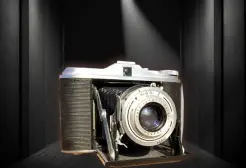
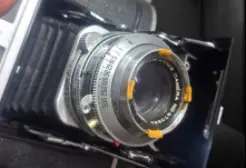
The first camera in this cherished collection is the Aries Viceroy folding camera. Just uttering its name conjures images of a bygone era. This isn't just a camera; it's a piece of art, a marvel of engineering from a time when cameras were elegant contraptions meant to be admired as much as used. With its beautiful chrome accents and the satisfying snap as it unfolds, revealing its bellows, the Viceroy is a testament to early photographic craftsmanship. I can almost picture my father, younger and full of enthusiasm, carefully setting up a shot, perhaps on a family vacation or a special occasion. This camera likely captured some of our earliest family memories, moments that predate my own conscious recollections but live on in his carefully preserved negatives. It speaks of a slower, more deliberate approach to photography, where every frame was precious, and the ritual of taking a picture was part of the magic.
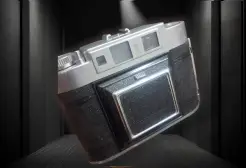
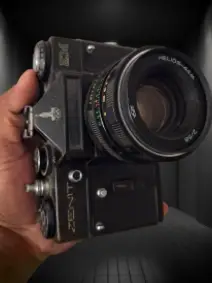
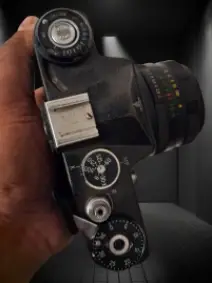
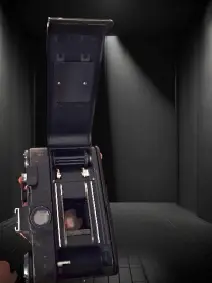
Next in line is the Zenit ET. This is where the aesthetic shifts from elegant showpiece to rugged workhorse. Hailing from the Soviet era, the Zenit ET is famously robust, unapologetically mechanical, and built like a tank. It's a camera that doesn't whisper; it clicks with authority. The Zenit ET was likely my father's companion for more serious photographic pursuits. It's a fully manual camera, demanding a deep understanding of aperture, shutter speed, and focus. There's no auto-anything here – just the photographer's skill and intuition. Holding it, I feel the weight of countless decisions my father must have made through its viewfinder. It taught him patience and precision, forcing him to engage fully with the light and the scene. For me, it represents the foundational learning, the pure, unadulterated craft of photography that strips away all modern conveniences and leaves you with the essence of capturing light.
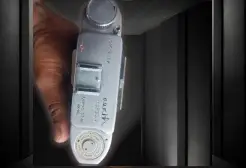
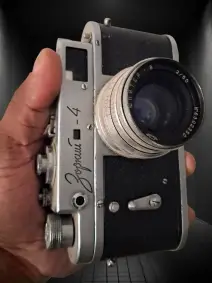
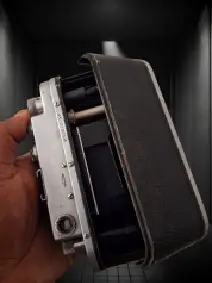
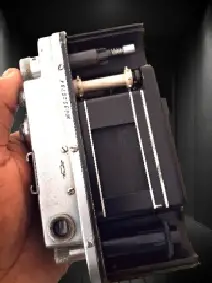
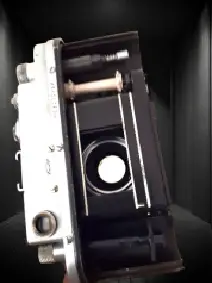
Finally, we arrive at the Zorki 4, another Soviet-made classic that holds a special place in my heart. Often referred to as a "poor man's Leica," the Zorki 4 is a rangefinder camera that exudes a distinct charm. It's more sophisticated than the Zenit ET, with its coupled rangefinder focusing system demanding a different kind of precision.The Zorki 4 feels like the camera my father might have used for his more exploratory, artistic endeavors – perhaps street photography, candid portraits, or capturing the nuances of everyday life. Its quiet rangefinder mechanism makes it ideal for unobtrusive shooting, allowing the photographer to melt into the background and observe. This camera speaks of a desire to capture not just events, but emotions and stories within a frame. It’s where skill met a burgeoning artistic vision, a quest for a different kind of photographic truth.
Today, these cameras sit on my shelf, silent witnesses to a passion that spans generations. But they are not merely display pieces. Each one, in its own way, still functions, still has the potential to weave new light into film.
When I pick up the Aries Viceroy, I feel connected to the very beginning of my family's visual history. With the Zenit ET, I channel my father's meticulous dedication to the craft. And with the Zorki 4, I embrace the artistic spirit he embodied.
This isn't just about owning old cameras; it's about honoring a legacy. It's about understanding that photography is more than just pressing a button – it's an heirloom, a story, a connection. And as I occasionally load a roll of film into one of these mechanical marvels, I feel a profound connection to my father, carrying his passion forward, one deliberate click at a time.
Do you have cherished family heirlooms that tell a similar story? Share your thoughts in the comments below!
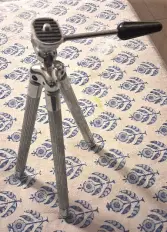
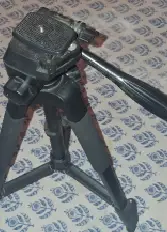
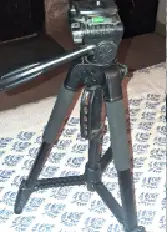
The camera tripod is photography’s silent, steadfast partner—a tool designed not for capturing light, but for conquering motion. Yet, tracing the lineage of this simple three-legged support reveals an astonishing evolution, transforming it from a heavy, hand-crafted studio fixture into a lightweight, technologically precise piece of modern engineering.
This is the story of how the tripod shed its Victorian weight, embraced the digital age, and redefined stability for the modern DSLR shooter.
To understand the modern tripod, we must first appreciate its ancestor, born in the era of wet plates and large format cameras. The vintage tripod—dating from the late 19th century through the mid-20th century—was not a portable accessory; it was an installation. These tripods were typically hewn from dense hardwoods—mahogany, ash, or oak—and reinforced with heavy brass or iron fittings. They were glorious to behold: polished wood glistening, brass collars catching the light, and feet often ending in solid metal spikes meant to anchor them firmly into studio floors or challenging terrain. The Vintage Mechanics: The design reflected the burden it carried. Large format cameras were massive and dense, requiring enormous stability during lengthy exposures.
Weight: Their sheer mass (often 15 to 30 pounds for the legs alone) was their primary stabilizer. They were designed to resist vibration through inertia.
Adjustment: Setting up was a deliberate act. Legs were secured by wing nuts or large threaded clamps, demanding slow, careful adjustment. The center column, if one existed, was often a heavy geared mechanism, grinding into place.
The Head: The focus was on controlled tilt and pan, usually achieved via highly specialized, slow-moving geared heads built to handle asymmetrical weights (like bellows cameras).
Using a vintage tripod was an act of commitment. It commanded patience, rewarded meticulous setup, and served a photography process that was slow, methodical, and governed by the limitations of film speed. If a shoot required movement, the entire apparatus had to be broken down, carried, and painstakingly reassembled.
The modern DSLR and mirrorless camera systems, though significantly lighter than their large format ancestors, demand higher standards of stability than ever before. Why? Because the digital sensor is unforgiving. Even the slightest vibration or microscopic movement during a high-resolution, long-exposure shot will reveal itself as disastrous blur—a phenomenon exacerbated by high pixel density and telephoto lenses.
The contemporary tripod is a masterpiece of material science and ergonomic design, optimized for speed and precision.
The pivotal material change was the widespread adoption of carbon fiber composites. This material solved the fundamental trade-off of the aluminum era:
Vibration Dampening: Unlike metal, carbon fiber excels at absorbing vibrational energy, making high-quality modern tripods incredibly stable even when lightweight.
Weight-to-Strength Ratio: A modern carbon fiber tripod (often weighing 3 to 6 pounds) can safely support four to five times its weight, something unimaginable with wood or aluminum construction.
The cumbersome wing nuts and slow screw clamps of old have been replaced by rapid-action mechanisms:
Twist Locks and Flip Locks: Modern leg locks allow a photographer to deploy or collapse all three sections of a leg in seconds with a single hand movement. Speed is paramount.
Modularity: The modern tripod is modular. The head can be swapped out easily. Center columns can often be inverted for macro work or removed entirely to shave weight. Many legs now feature removable sections that convert into full-sized monopods.
While the traditional pan-and-tilt head is still used for video (where smooth horizontal panning is crucial), the photography world largely embraced the Ball Head.
The ball head allows a photographer to loosen a single knob and instantly adjust the composition across all axes, locking it firmly into place—a fluid, fast contrast to the slow, separate axis adjustments of the brass antique. Furthermore, the inclusion of Arca-Swiss compatible Quick Release Plates means changing cameras or lenses is now a matter of a satisfying snick, not a manual screw-in process.
The transformation of the vintage tripod to the modern DSLR support is a compelling microcosm of photographic history. The vintage tripod was built for permanence, a monument to the slow, high-effort craft of early photography. Its stability was vested in its mass, its beauty in its hand-tooled materials. It demanded respect for the process.
The modern carbon fiber tripod, however, is built for efficiency, adaptability, and ultimate precision in the digital realm. Its stability is a function of advanced engineering and material science, tailored to the demands of instantaneous digital feedback, high mobility, and unforgiving sensor resolution. Yet, despite the gulf between mahogany and carbon fiber, the essence remains unchanged. Whether supporting a cumbersome brass lens or a featherlight mirrorless body, the tripod’s mission is singular: to stop time, hold the world perfectly still, and allow the photographer to capture the light in its purest, most deliberate form. The methods have evolved radically, but the quiet promise of stability endures.